
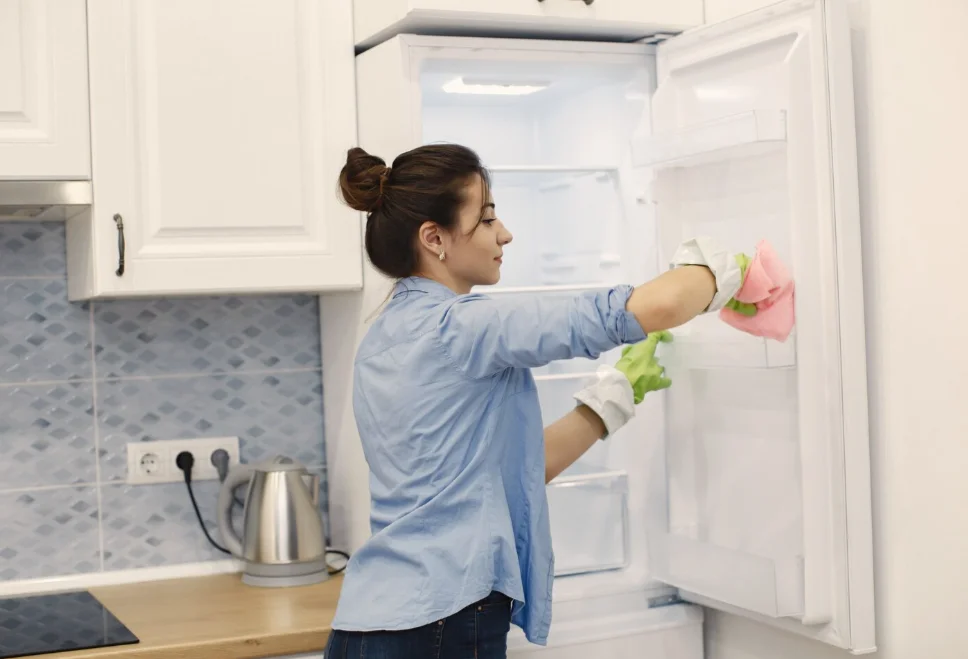
Vinegar is a natural disinfectant that kills many bacteria and fungi, leaving no harmful residues. Baking soda works as a gentle abrasive and powerful odor absorber, making it ideal for cleaning a fridge.
Moreover, these pantry staples are affordable, eco-friendly, and won’t damage your fridge’s surfaces. Unlike bleach, they won’t release harmful fumes or corrode rubber seals. This is why many cleaning experts consider them the best cleaners for fridge maintenance.
What Supplies Do You Need for Fridge Cleaning?
Before starting, you’ll need:
- White vinegar
- Baking soda
- Warm water
- Mild dish soap
- Sponge or dishcloth
- Small brush (for corners)
- Towels or microfiber cloths
It’s also wise to unplug the fridge to save energy and avoid electrical hazards. Place perishable food in a cooler with ice packs while you work. This is also a good time to check expiration dates and toss out spoiled items.
Additionally, you must check the manufacturer’s guidelines before starting the cleaning process. According to the American Cleaning Institute (ACI), more than one-third of Americans are unfamiliar with the manufacturer’s recommendations for cleaning their refrigerator. Ensure to check to prevent damage and save heavy repair costs.
How to Clean a Fridge with Vinegar and Baking Soda (Step-by-Step)

- Empty the Fridge and Remove Shelves
- Prepare the Cleaning Solution
3. Scrub the Interior
- Dip a brush into the mixture to clean corners and seams.
- Use a sponge to wipe down walls, bins, and compartments.
- Repeat for stubborn spots.
4. Clean the Shelves and Drawers
Wash them separately with warm water and mild dish soap. Dry thoroughly before returning it to the fridge.5. Wipe the Exterior and Door Gasket
Use warm, soapy water for plastic exteriors or stainless steel cleaner for metal exteriors. Clean the rubber seal with plain water to avoid damage.6. Deodorize
Place an open plate or box of baking soda inside to absorb odors. For extra freshness, add a drop of lemon oil to a cotton ball and leave it inside.7. Let it Dry
Keep the door open for at least 15 minutes to air dry before plugging the fridge back in.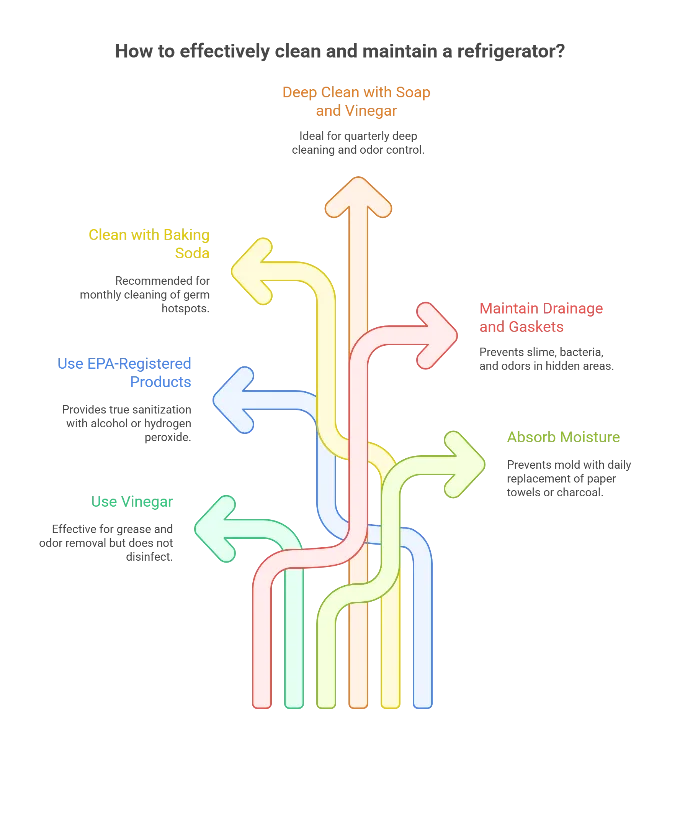
What Mistakes Should You Avoid When Cleaning a Fridge?
- Avoid using bleach or ammonia-based cleaners, as they can damage surfaces and contaminate food.
- Avoid scrubbing glass or plastic shelves with hot water while they’re cold to prevent cracking.
- Never soak the door seal in vinegar, as it can weaken the rubber.
Expert-Approved Tips for Fridge Cleaning
- “Cleaning pros like Tim Conn and Carylanne Brown say: vinegar works wonders on grease and odors but doesn’t disinfect. For true sanitization, use EPA-registered alcohol or hydrogen peroxide products.” – The Spruce.
- “NSF identifies fridge drawers (especially meat and veg sections) as germ hotspots. They recommend monthly cleaning with 1–2 tbsp baking soda per quart of warm water.” – NSF.
- “Deep-clean every 3–4 months using mild soap and vinegar. Keep a box of baking soda open inside to fight odors, and rotate food (FIFO) to reduce waste.” – Southern Living.
- “Homes & Gardens says never to skip the fridge’s drainage hole, gaskets, or the exterior, these often-hidden areas collect slime, bacteria, and odors.” – Homes & Gardens.
“Pro tip: Place fresh paper towels or use activated charcoal to absorb moisture, but change them daily or they’ll promote mold.” – The Maid Squad
How Can You Keep Your Refrigerator Fresh for Longer?
Between deep cleans, follow these tips:
- Check for expired or spoiled items every week.
- Wipe spills immediately to prevent stains.
- Store leftovers in sealed containers.
- Keep a small open box of baking soda inside for continuous odor control.
For mold concerns, check how to clean mold safely without harmful chemicals.
Why Hire Professional Fridge Cleaning Services Like The Maid Squad?
- Using colored clothes, which may transfer dye.
- Rubbing stains spreads them deeper into the fibers.
- Skipping the patch test before applying a cleaner.
- Over-soaking fabric can lead to mold or water stains.
Expert-Approved Tips for Fabric Sofa Cleaning
- The IICRC (Institute of Inspection Cleaning and Restoration Certification) recommends always checking the fabric’s care label before cleaning to prevent shrinkage, color bleeding, or texture damage.
- Baking soda is a safe, natural deodorizer that neutralizes odors without damaging fabrics (The Spruce).
- Good Housekeeping upholstery pros suggest blotting with a white cloth and a mild detergent solution for stains, never scrubbing. To avoid pushing stains deeper into fibers.
- Savvy Cleaner’s Angela Brown says steam cleaning can refresh most water-safe fabrics, but always test a hidden area first.
- Better Homes & Gardens recommends applying a fabric protector after cleaning to repel spills and extend your sofa’s life.
The Maid Squad Vs DIY: Which Is Better?
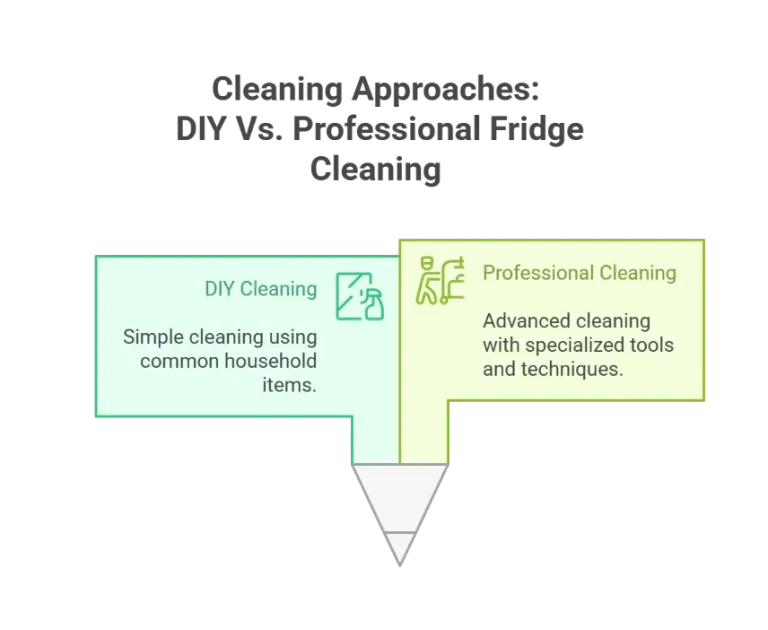
While cleaning sofas at home can save money, professional services offer benefits you can’t always match.| DIY Cleaning | The Maid Squad |
| Low cost | Professional-grade equipment and products |
| Flexible timing | Expertise in all fabric types |
| Requires your effort | No labor needed from you |
| Risk of damage if done wrong | Safe, tested methods |