
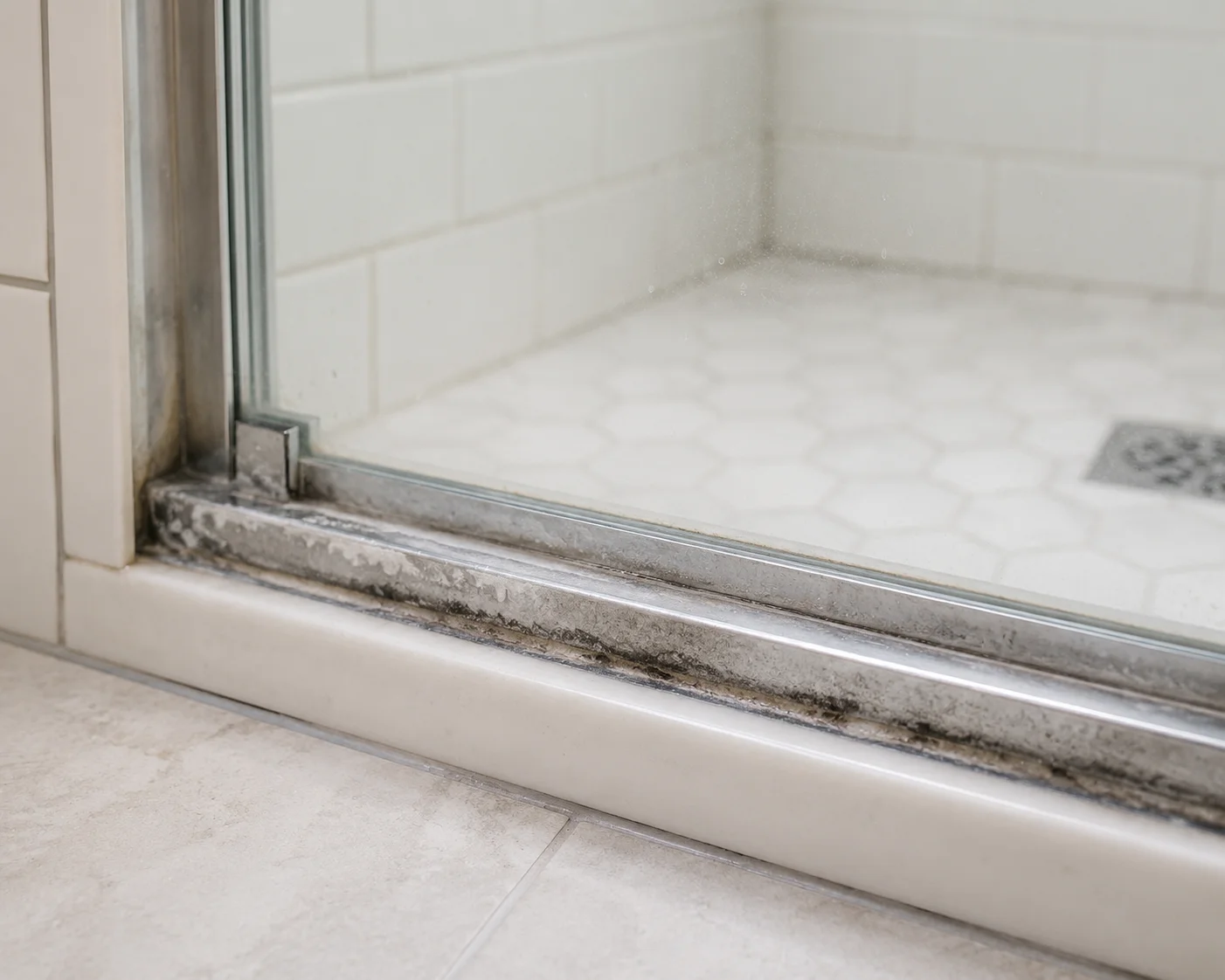
How to Clean Shower Door Tracks
Sprinkle baking soda along the track. Pour white vinegar over it and let it fizz for 15 to 20 minutes. Scrub with an old toothbrush, pressing into the corners. Flush with hot water and wipe dry.
For heavy buildup, lay vinegar-soaked paper towels in the channel and leave them for 30 to 60 minutes before scrubbing. Extended contact breaks down hardened calcium and soap scum that a quick scrub cannot shift.
Why Shower Door Tracks Get So Dirty
The track sits at floor level and catches everything that runs off the door: soap, shampoo, conditioner, and hard water. It all pools in the channel instead of draining cleanly.
Unlike the glass above it, the track is narrow and recessed. A standard sponge cannot reach the base or corners, so residue layers up undisturbed between cleans.
Los Angeles tap water contains roughly 100 to 200 parts per million of dissolved calcium and magnesium, according to LADWP water quality reports. Each time water evaporates from the track, those minerals stay behind and harden into a gritty crust over time.
The same damp, enclosed channel also makes shower tracks a reliable spot for mold, particularly in the corners where the track meets the wall tile.
What You Need
Standard sponges and cloths cannot fit inside the channel. You will need:
- Old toothbrush or narrow grout brush
- Cotton swabs or pipe cleaners for corners and track ends
- White distilled vinegar
- Baking soda
- Dish soap
- Paper towels for soaking sessions
- Small cup or ladle for flushing
- Dry microfiber cloth for the final wipe
For heavy mineral scale, a plastic scraper or old credit card held at a low angle loosens the top crust before scrubbing. Do not use metal scrapers on aluminium or coated tracks as they scratch the surface.
Step-by-Step Cleaning Method
Step 1: Remove Loose Debris
Wipe out loose hair, soap flakes, and grit with a dry paper towel before applying anything. Cleaning over dry debris pushes it around and blocks the solution from reaching the buildup underneath.
Step 2: Apply Baking Soda and Vinegar
Sprinkle baking soda along the full length of the track and into the corners. Pour or spray white vinegar directly over it. The fizzing lifts soap scum and softens the surface layer of mineral deposits. Leave it for at least 15 minutes without disturbing it.
Step 3: Add Dish Soap
Once the fizzing settles, add a few drops of dish soap. Dish soap cuts through body oil and grease, which vinegar does not dissolve well on its own. Work it in lightly with the toothbrush tip and let everything sit for another five minutes.
Step 4: Scrub
Scrub the full channel with short back-and-forth strokes, pressing into the base and corners where buildup is thickest.
Switch to a cotton swab for the very ends of the track where it meets the wall. Those tight spots collect the most grime and a brush cannot reach them fully.
Step 5: Flush with Hot Water
Use a cup or ladle to direct hot water along the channel from end to end. A showerhead spray is too broad and does not push loosened debris toward the drain opening effectively.
Check the track under good light after flushing. If residue remains in the corners, scrub again before the final rinse.
Step 6: Dry the Track
Wipe the track dry with a microfiber cloth, pressing into the channel to pull moisture from the base and corners.
A damp track in a closed shower gives mold spores the conditions they need to settle within a few days. Drying it fully after each clean is the single most effective thing you can do to extend how long it stays clean.
Dealing with Heavy Hard Water Deposits
When scale feels gritty and does not respond after a 20-minute soak, it needs longer acid contact to dissolve.
Fold paper towels into strips that fit the channel width and saturate them with undiluted white vinegar. Lay them along the full length of the track so the vinegar stays in direct contact with the scale rather than running off. Leave them for 30 to 60 minutes. For months of accumulated buildup, leave them up to two hours.
After removing the towels, the scale should feel softer. Use a plastic scraper to lift the loosened crust before scrubbing, so the brush addresses the remaining thin layer rather than the full deposit. Flush with hot water and dry the track.
First-time deep cleans on long-neglected tracks may need this treatment repeated two or three times before the track surface fully clears. Regular upkeep after that prevents scale from reaching the same level again.
Dealing with Mold and Mildew in the Track
Mold appears most often in the corners where the track meets the wall and along the base where water sits between showers. It shows as dark grey, black, or pink discoloration that does not come off with soap alone.
For light mold, apply undiluted white vinegar, leave it for 30 minutes, then scrub and rinse. White vinegar at five percent acidity kills many common bathroom mold species with adequate contact time.
For mold that has grown into the grout or silicone caulk at the track edge, apply a diluted bleach solution, one part household bleach to ten parts water, using a cotton ball directly on the affected joint. Leave it for ten minutes, then rinse well. Do not mix bleach and vinegar in the same application.
If the caulk is permanently discolored, the mold has grown inside the material itself. No cleaning method clears that. The caulk needs to be removed, the joint cleaned, and fresh caulk applied.
Which Method to Use by Buildup Level
| Buildup Level | What It Looks Like | Best Method | Soak Time |
|---|---|---|---|
|
Light |
Thin film, slight discoloration | Dish soap and warm water with a grout brush | 5 minutes |
| Moderate | Visible soap scum, some graying | Baking soda and vinegar scrub |
15 to 20 minutes |
|
Heavy |
Thick white crust, gritty texture | Vinegar-soaked paper towel dam | 30 to 60 minutes |
| Severe | Mineral scale plus visible mold | Repeat vinegar soak, then targeted bleach on mold spots |
60 plus minutes |
Keeping Tracks Clean Between Deep Cleans
- After each shower, run a dry cloth along the track to absorb standing water before it evaporates and leaves mineral residue.
- Once a week, spray the track with a 50/50 mix of white vinegar and water and wipe it down. This prevents deposits from hardening between cleans.
- Leave the shower door open after each use so the track can dry faster.
- Once a month, do a quick five-minute baking soda and vinegar scrub to stay ahead of buildup.
- After a deep clean, apply a thin coat of silicone-based spray lubricant or paste car wax to the dry track. This creates a barrier that slows mineral buildup and makes weekly wiping faster.
If hard water staining on the shower door glass is also an issue, our guide on removing water stains from shower doors covers that separately.
How do you keep shower door tracks clean long-term?
Wipe the track dry after each shower, spray with diluted white vinegar weekly, and scrub with baking soda and vinegar once a month. Apply silicone lubricant or car wax after each deep clean to slow mineral buildup.
When to Call a Professional
Tracks with years of hardened scale, mold that has spread into surrounding tile grout and wall caulking, or a sliding door that sticks because of buildup in the channel are good candidates for a professional bathroom clean.
The Maid Squad has served more than 5,000 customers across Los Angeles with a 4.8-star rating. Our bathroom cleaning covers shower tracks, grout lines, door seals, and the spots most people skip during routine maintenance.
Book your cleaning today and let us handle the hard-to-reach areas.
Learn more about our professional bathroom cleaning service and what each visit includes.
Frequently Asked Questions
How often should shower door tracks be cleaned?
Once a month for a full scrub keeps most tracks in good condition. If you wipe the track dry after each shower and do a light vinegar spray weekly, the monthly clean takes under ten minutes. Without any upkeep, tracks in hard water areas like Los Angeles can develop visible scale in as little as two to three weeks.
Can I use bleach to clean shower door tracks?
Bleach kills mold and removes its discoloration, but it does not dissolve mineral scale or soap scum. On a track with heavy hard water deposits, bleach does nothing to the calcium crust and can discolor certain metal finishes. Use vinegar for mineral deposits first, then target any remaining mold spots with diluted bleach. Never mix bleach and vinegar together.
Why do my shower door tracks turn orange or pink?
Orange or rust-colored buildup comes from iron in the water supply. When iron-rich water evaporates on a surface, it leaves a reddish oxide deposit. This responds to a citric acid cleaner or a rust-specific bathroom product rather than standard baking soda and vinegar.
Pink or salmon film is almost always Serratia marcescens, a bacterium common in damp bathroom environments that feeds on soap residue and minerals. It returns reliably unless the track is dried thoroughly after each shower and wiped down regularly with a disinfecting cleaner.
How do I clean shower door tracks without removing the doors?
You do not need to remove the doors. The toothbrush, cotton swab, and hot water flush method in this guide works fully with the doors in place. Removing them gives better access to the back of the channel, but that is only necessary for extreme buildup on a long-neglected track.
Does WD-40 help with shower door tracks?
WD-40 lubricates a track so a sticking door slides more smoothly. It does not clean. Applied to a dirty track, it coats the grime with oil and makes the next clean harder. Always clean and dry the track first, then lubricate. Silicone-based spray is preferable to WD-40 for shower tracks because it repels water better and does not attract dust.