
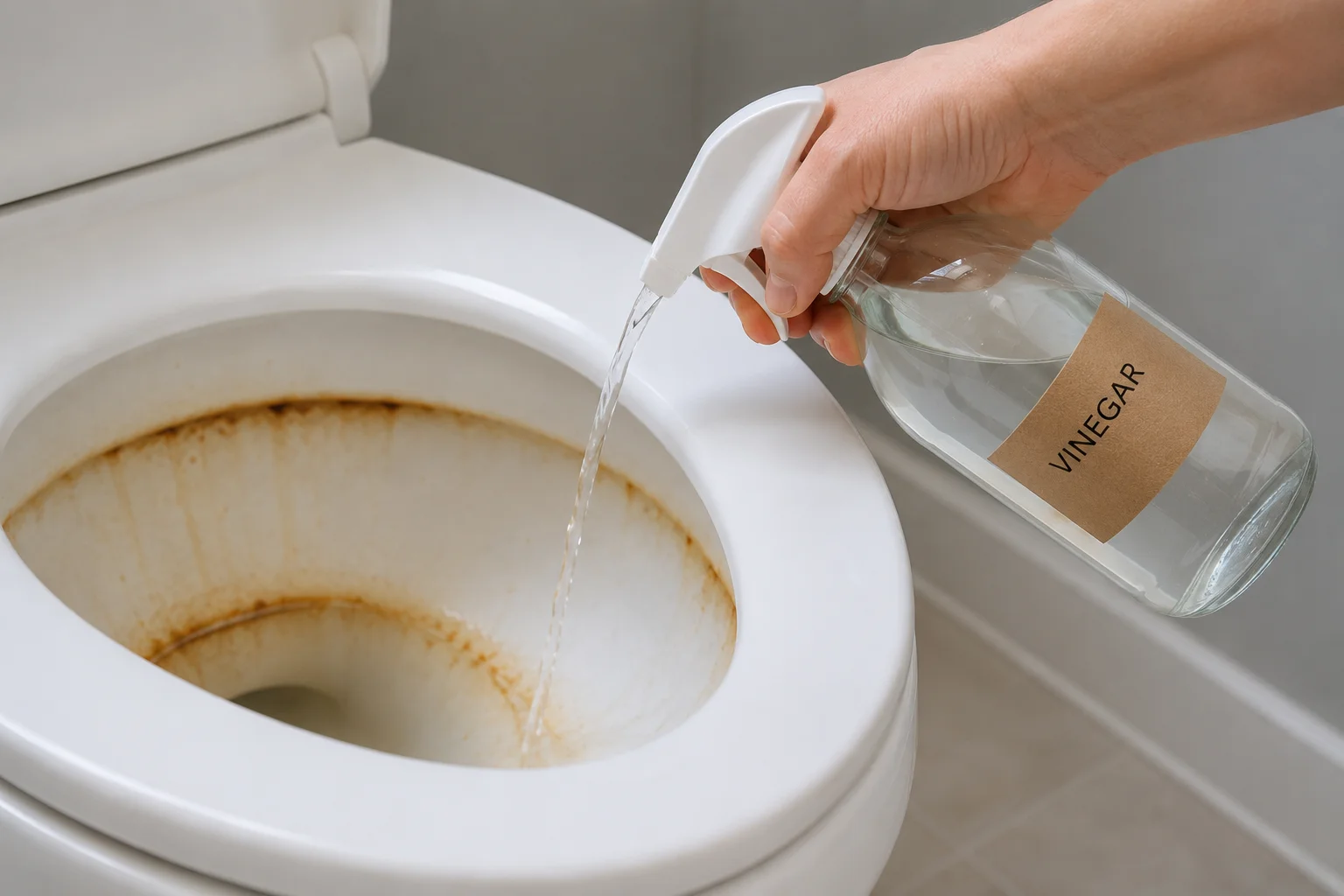
Rust stains in toilets need acid, not scrubbing and not bleach. Pour white vinegar directly into the bowl, let it sit for 30 to 60 minutes, then scrub with a toilet brush. For a set rust ring or heavier staining, apply Bar Keepers Friend powder or a dedicated rust remover like Iron Out, leave it for the directed contact time, scrub, and flush.
Skip the bleach. It does not remove rust and can react with iron compounds to darken the stain further. The same applies to most standard toilet bowl cleaners: they are formulated for limescale and bacteria, not for iron oxide.
Why Rust Forms in Toilets
Iron in the Water Supply
Dissolved ferrous iron in the water supply is the most common source of toilet rust staining. When iron-rich water enters the bowl and sits, it oxidizes on contact with air and deposits orange-brown iron oxide on the porcelain surface.
Toilets are more vulnerable than other fixtures because water sits in the bowl constantly rather than draining after each use. That standing water gives dissolved iron continuous contact with the porcelain, and the oxidation builds layer by layer over time. The waterline and the area just below it are where this staining concentrates most visibly.
Corroding Pipes and Fill Valves
Older galvanized steel supply pipes corrode from the inside as they age. Rust particles travel with the water into the tank and bowl with every fill cycle. If rust staining appears consistently across multiple fixtures in the home, corroding pipes are almost always part of the cause.
The fill valve inside the tank is another source. Standard fill valves contain metal components that corrode over time, particularly in areas with harder or more mineral-rich water. A corroding fill valve deposits rust directly into the tank water, which then flows into the bowl with each flush.
Metal Components Inside the Tank
Flush handles, trip levers, chain links, and older ballcock-style fill valves all contain metal parts that sit in water permanently. As these components age and corrode, the rust they produce stains the interior walls of the tank and is carried into the bowl with each flush cycle.
Opening the tank lid and checking the interior is worth doing if you have persistent bowl staining that returns quickly after cleaning. Visible rust on tank components, orange-tinted water in the tank, or a rusty smell when the lid is removed all point to hardware inside the tank as the active source.
Why Bleach Makes Toilet Rust Worse
Bleach is an oxidizing agent. Rust is iron oxide, already a product of oxidation. Applying more oxidizer to an iron oxide stain does not dissolve it. It can react with the iron compound and darken the deposit, making the stain more pronounced and harder to treat with acid cleaners afterward.
Most commercial toilet bowl cleaners contain bleach or chlorine compounds as their primary active ingredient. They work well on limescale, bacteria, and general discoloration, but they have no chemical action against rust. Using them repeatedly on a rust stain delays the right treatment and can create a combined stain that is harder to clear than the original rust alone.
Acid is the correct chemistry for rust. Iron oxide dissolves in acidic conditions, which is why vinegar, citric acid, oxalic acid, and phosphoric acid-based products all work on rust where bleach does not.
Removing Rust from the Toilet Bowl
Light to Moderate Rust Rings
Pour two to three cups of undiluted white vinegar into the bowl and use a toilet brush to spread it around and under the rim. Let it sit for at least 30 minutes, longer if the staining is more pronounced. Scrub the ring firmly with the brush and flush.
For a faster or more targeted treatment, citric acid powder dissolved in hot water and poured into the bowl works on the same principle as vinegar but at higher concentration. Use two to three tablespoons dissolved in a cup of hot water, pour it directly onto the stained area, and leave for 30 minutes before scrubbing.
Bar Keepers Friend powder applied directly to the wet bowl surface and scrubbed with a damp toilet brush handles moderate rust rings that vinegar alone does not fully clear. Leave the paste on the stained area for five minutes before scrubbing. Rinse by flushing.
Heavy or Set Rust Stains
For rust staining that has built up over months and does not respond to vinegar or Bar Keepers Friend, a dedicated rust remover is the appropriate product. Iron Out toilet bowl cleaner and similar products containing sodium hydrosulfite or oxalic acid are formulated specifically for iron oxide deposits in toilets.
To get adequate contact time with a set stain, turn off the water supply valve behind the toilet and flush to empty most of the bowl. This drops the water level and allows the rust remover to sit directly on the stained porcelain at full concentration rather than being diluted by standing water. Apply the product, leave it for the contact time on the label, scrub firmly, then turn the water back on and flush to rinse.
Do not mix rust removers with bleach-based cleaners in the bowl. The chemical reaction between chlorine and some rust remover compounds produces chlorine gas, which is harmful in an enclosed bathroom. Use one product, rinse fully, then use the other if needed.
Under the Rim and Jet Holes
The area under the rim and the small jet holes that direct water into the bowl during flushing are common rust deposit sites. Water sits in these channels between flushes, and iron deposits accumulate in areas that a standard toilet brush cannot reach effectively.
Fold paper towels into strips, saturate them with undiluted white vinegar, and pack them under the rim so the vinegar stays in contact with the stained surface. Leave them for 30 to 60 minutes. For the jet holes, use a small brush, an old toothbrush, or a pipe cleaner soaked in vinegar to work into each opening. Flush to rinse.
Gel-formula rust removers are useful for under-rim staining because the gel clings to the angled surface under the rim rather than running into the water immediately. Apply the gel, allow the full contact time, then scrub and flush.
Removing Rust from the Toilet Tank
Rust inside the tank does not affect the bowl until it is flushed through, but a heavily rusted tank interior is the source of recurring bowl staining and should be addressed rather than just treating the bowl repeatedly.
Turn off the water supply valve and flush to empty the tank. Pour two to three cups of white vinegar into the empty tank and use a long-handled brush or sponge to scrub the walls and bottom. For heavy rust buildup on the tank walls, a spray of Bar Keepers Friend liquid or a diluted citric acid solution left for 15 to 20 minutes before scrubbing is more effective than vinegar alone.
After scrubbing, turn the water supply back on and allow the tank to fill. Flush two or three times to rinse the tank fully before the toilet returns to normal use.
If rust returns to the tank within days of cleaning, the hardware inside the tank is the active source. Replacing the fill valve, flapper, and flush handle with modern plastic and rubber equivalents eliminates the corrosion source. These parts are inexpensive and straightforward to replace without professional help in most standard toilet designs.
Removing Rust from the Toilet Seat and Hinges
Toilet seat rust almost always originates at the hinge bolts, which are typically metal and sit in a permanently damp environment at the back of the bowl. The rust runs down from the hinge onto the seat and the porcelain surface around it.
For light rust on the seat surface, apply white vinegar or lemon juice on a cloth and hold it against the stained area for 10 to 15 minutes. Wipe away and rinse. For plastic seats, avoid abrasive powders that scratch the finish and trap future staining.
Hinge rust that has caused visible corrosion on the bolts themselves is not a cleaning problem. Corroded bolts do not clean back to a serviceable condition. Remove the seat, replace the hinge hardware with stainless steel or plastic bolt covers, and reattach. Stainless steel hinge bolts do not rust and eliminate this source permanently.
Rust Stain Severity and Method Guide
| Location | Severity | Best Method | Contact Time | Safe for Porcelain? |
|---|---|---|---|---|
|
Bowl |
Light ring | White vinegar or citric acid | 30 to 60 min | Yes |
|
Bowl |
Moderate stain | Bar Keepers Friend paste | 5 to 10 min |
Yes |
| Bowl | Heavy / set | Oxalic acid cleaner or Iron Out | 15 to 30 min |
Yes, rinse well |
|
Under rim / jets |
Any | Vinegar-soaked paper towels or gel cleaner | 30 to 60 min | Yes |
|
Tank interior |
Light to moderate | Vinegar soak, then scrub | Overnight if empty |
Yes |
| Seat and hinges | Light to moderate | White vinegar or lemon juice on cloth | 10 to 15 min |
Check seat material |
|
Seat hinges |
Heavy corrosion | Replace hinges | N/A |
N/A |
How to Stop Rust Stains from Coming Back
Quick Answer: How do you prevent rust stains in a toilet?
Fix the source first. If iron-rich water is the cause, a whole-house iron filter or an in-line filter on the supply line reduces iron before it reaches the toilet. Replace metal tank hardware with plastic and rubber components. Clean the bowl with a weekly vinegar treatment to prevent iron deposits from building up between deep cleans.
- Replace metal tank components with plastic and rubber equivalents. Modern fill valves, flappers, and flush handles are made from materials that do not corrode and are direct replacements for older metal parts.
- Install a whole-house iron filter if your water supply has high iron content. Standard water softeners reduce hardness minerals but do not reliably remove dissolved iron. An iron-specific filter addresses the root cause before water reaches any fixture in the home.
- Pour one to two cups of white vinegar into the bowl weekly and let it sit overnight before flushing. This prevents iron deposits from accumulating between deep cleans without damaging the porcelain or the toilet’s internal components.
- Check and replace hinge bolts with stainless steel versions. Standard hinge hardware corrodes within a few years in bathroom conditions and is a consistent source of seat and bowl staining near the back of the toilet.
- Fix any dripping supply line or slow fill valve. A valve that allows a slow trickle of iron-rich water into the bowl creates a continuous deposit at the waterline even when the toilet has not been flushed.
If your toilet also has a hard water mineral ring or limescale buildup separate from the rust, our guide on how to clean water stains in a toilet bowl covers that type of staining separately.
When to Call a Professional
Rust staining that returns within days of a thorough clean, rust that appears across multiple fixtures at the same time, or a tank interior with advanced corrosion on multiple components points to a pipe or water supply problem that cleaning alone will not resolve. A plumber can test the iron content of your water at the tap and inspect the supply lines to determine whether pipe replacement or a filtration system is needed.
For bathroom cleaning that covers rust staining alongside general deep cleaning of the toilet, grout, fixtures, and surrounding tile, a professional cleaning service reaches everything in one visit.
The Maid Squad has served more than 5,000 customers across Los Angeles with a 4.8-star rating. Our bathroom cleaning service covers rust staining, limescale, grout, and the areas standard cleaning misses.
Book your cleaning today and let us handle the hard-to-shift stains.
Learn more about our professional bathroom cleaning service and what each visit includes.
Frequently Asked Questions
What is the orange ring in my toilet — is it always rust?
Not always. Pink or orange film that appears quickly between cleans and wipes away easily is usually Serratia marcescens, a bacterium that grows in damp environments and feeds on minerals and soap residue. It forms a flat, slightly slippery film and responds to a disinfecting toilet cleaner or diluted bleach solution. Rust, by contrast, is a rough, gritty deposit that does not wipe away with a cloth and requires acid to dissolve. If your orange stain clears with a standard toilet cleaner, it is bacterial. If it resists cleaning and feels rough to the touch, it is rust.
Is it safe to put rust remover inside a toilet tank?
Products like Iron Out are formulated for use in toilet tanks and are safe for porcelain and the rubber and plastic components in modern tanks. Drop-in rust remover tablets are also available specifically for tank use. Avoid using products containing acids like hydrochloric acid in the tank, as prolonged contact can degrade rubber flappers and gaskets. Always check the product label for tank compatibility before use, and flush the tank several times after treatment to rinse the remover fully before the toilet returns to regular use.
How long should you leave rust remover in a toilet bowl?
Contact time depends on the product and the severity of the staining. White vinegar works best with 30 to 60 minutes of contact. Bar Keepers Friend needs five to ten minutes before scrubbing. Dedicated rust removers like Iron Out toilet bowl cleaner typically require 15 to 30 minutes for set stains. Do not exceed the contact time on the product label. Leaving acid-based rust removers in the bowl longer than directed does not improve the result and can affect the toilet’s wax ring seal if the cleaner drains past the trap over a very extended period.
Can rust stains in a toilet damage the porcelain permanently?
Light to moderate rust staining on vitreous china toilet porcelain does not damage the surface. The iron oxide deposit sits on top of the glaze rather than etching into it. Staining that has been present for years and has been repeatedly scrubbed with abrasive materials is the greater risk: the glaze can be worn in small areas, creating rough patches that collect future staining more readily. Treating rust with the correct acid cleaner rather than abrasive scrubbing protects the glaze and produces a better result.
Does WD-40 remove rust from a toilet bowl?
WD-40 can loosen light surface rust in a toilet bowl and is sometimes used as a short-term treatment. It contains mineral spirits and other petroleum-based compounds that can displace moisture and reduce light rust deposits on contact. The limitations are significant for toilet use: it leaves an oily film in the bowl that attracts dirt and is difficult to rinse away fully with a standard flush, it is not designed for submerged or repeatedly wet surfaces, and it does not work on set or heavy rust staining. A dedicated acid-based rust remover is a more effective and practical option for toilet bowl rust.