
What Makes Borax a Useful Cleaner
Borax, or sodium tetraborate decahydrate, is a naturally occurring mineral compound with a pH of around 9.5. That mild alkalinity is what makes it useful as a cleaner. It breaks down greasy and organic residue, inhibits mold and bacterial growth, deodorizes surfaces, and boosts the cleaning power of soap and detergent.
Most people know borax as a laundry additive and nothing else. The seven uses below cover areas where borax consistently outperforms common household cleaners or handles jobs that other products cannot.
7 Things You Can Clean with Borax
1. Toilet Bowl Stains
Borax tackles rust stains, mineral rings, and general discoloration inside a toilet bowl without the harsh fumes of bleach-based cleaners. Pour half a cup of borax into the bowl and let it sit for at least 30 minutes, or overnight for stubborn staining. Scrub with a toilet brush and flush.
For a heavier clean, combine borax with a small amount of white vinegar applied separately after the borax has had time to work. Do not mix them directly in the bowl at the same time. Add the borax first, let it sit, scrub, then flush before applying vinegar to address any remaining residue.
2. Mold and Mildew on Grout
Borax inhibits mold growth by disrupting the enzyme activity that mold colonies need to reproduce. Mix one cup of borax with two cups of warm water. Apply the solution to affected grout lines with a stiff brush and scrub. Rinse and allow the surface to dry.
Unlike bleach, borax does not simply bleach the color from mold while leaving the underlying biology intact. It disrupts the mold’s ability to grow back in the same spot. For tile grout in showers, leaving a diluted borax solution on the surface after cleaning and allowing it to dry rather than rinsing it away provides a degree of residual inhibition.
3. Mattresses and Upholstery Odors
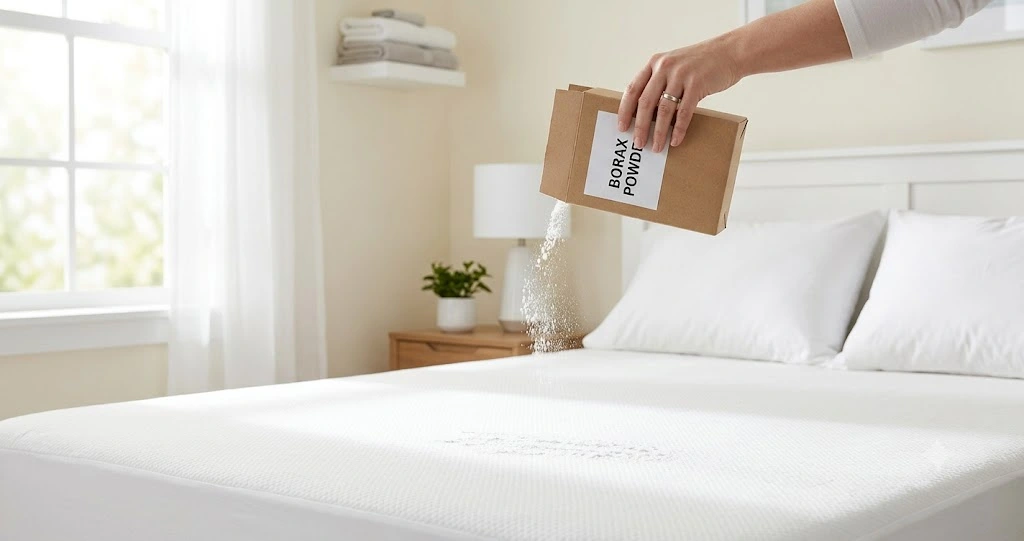
Borax is an effective dry deodorizer for fabric surfaces that cannot be machine washed. Sprinkle borax powder lightly over the surface of a mattress or upholstered furniture. Leave it for 30 minutes to an hour, then vacuum thoroughly.
Borax neutralizes acidic odor compounds in sweat, pet dander, and general body odor that accumulate in mattress fabric and foam over time. This works on the same principle as baking soda but with a higher pH that handles stronger and more set-in odors. Always vacuum every trace of the powder before using the surface again.
4. Garbage Bins
Garbage bins accumulate bacterial residue, food liquid, and odor-causing compounds at the base and sides even when lined. Dissolve a quarter cup of borax in two litres of warm water. Pour the solution into the empty bin, let it sit for ten minutes, scrub the interior walls and base, then rinse.
For persistent bin odor, leave a thin layer of borax powder at the base of the bin beneath the liner after cleaning. It absorbs moisture and inhibits the bacterial activity that causes odor between washes.
5. Laundry Stains and Odors
Borax has been used as a laundry additive for over a century. Add half a cup to the drum along with your regular detergent to boost stain removal, soften water hardness, and neutralize odors in workout clothes, towels, and bedding.
For pre-treating stains, make a paste of borax and warm water and apply it directly to the stained area. Leave it for 30 minutes before washing. Borax is effective on organic stains including blood, food, and sweat because its alkalinity breaks down protein and fat compounds in those stains.
Borax is not safe for silk or wool. The alkalinity at pH 9.5 damages the protein structure of these fibers. Use it only on cotton, linen, synthetic, and blended fabrics.
6. Outdoor Furniture
Outdoor furniture accumulates mildew, algae, and weathered grime that indoor cleaning products struggle to cut through. Mix a quarter cup of borax with a tablespoon of dish soap in a bucket of warm water. Scrub the furniture with a brush and rinse thoroughly.
Borax works well on resin, plastic, and treated wood outdoor furniture. Do not use it on aluminum patio furniture. The alkalinity of borax can cause discoloration and surface pitting on aluminum over time.
7. Drains and Pipes
For a slow or odorous drain, pour half a cup of borax down the drain followed by two cups of boiling water. Leave it for 15 minutes before flushing with hot water. Borax breaks down grease and organic buildup inside the drain pipe and deodorizes the smell that comes from decomposing food and bacteria in the drain.
This is a maintenance method rather than a full blockage fix. For a drain that is fully blocked, a mechanical solution is needed. For a drain that runs slowly or smells, monthly borax treatment keeps it clear between professional plumbing maintenance.
What Borax Should Not Touch
Quick Answer: What surfaces should you not use borax on?
Silk and wool: alkalinity at pH 9.5 damages protein-based fibers permanently
Aluminum: borax causes discoloration and surface pitting on aluminum finishes
Children’s skin and pet paws: borax is a skin irritant at direct contact and should not be left on accessible surfaces after cleaning
Food preparation surfaces without thorough rinsing: always rinse borax residue fully from kitchen surfaces before food contact
Borax should never be used near or ingested by people or pets. It is a cleaning agent, not a food-safe substance. The US National Library of Medicine classifies borax as harmful if swallowed and as a skin and eye irritant. Always wear gloves when using borax in concentrated form and rinse treated surfaces thoroughly before contact with hands, food, or pets.
Borax Safety: What You Need to Know
Borax is low in acute toxicity compared to many commercial cleaning chemicals but is not without risk. Direct contact with borax powder irritates the skin and eyes. Inhalation of the powder in an enclosed space irritates the respiratory tract. Ingestion causes nausea, vomiting, and gastrointestinal distress.
Keep borax out of reach of children and pets. Do not use borax as a pest deterrent in areas where pets or children walk barefoot, as they may ingest trace amounts through grooming or hand-to-mouth contact.
When using borax for cleaning, ventilate the room, wear rubber gloves, and avoid creating airborne powder dust. Rinse all treated surfaces with clean water after cleaning and before use.
Borax vs. Baking Soda vs. Washing Soda
All three are alkaline cleaning agents used in natural cleaning routines. They are not interchangeable. Here is how they compare:
| Product | pH | Best For | Avoid Using On | Safe to Mix With |
|---|---|---|---|---|
|
Borax |
~9.5 | Mold inhibition, toilet stains, deodorizing, laundry boost | Silk, wool, aluminum |
Water, dish soap |
|
Baking Soda |
~8.3 | Odor absorption, mild scrubbing, surface deodorizing | Fine or polished surfaces at high pressure |
Water, dish soap, vinegar |
|
Washing Soda |
~11 | Heavy grease, laundry, outdoor grime | Aluminum, fiberglass, silk, wool |
Water only, avoid acids |
Borax sits in the middle of the three in terms of strength. Baking soda is gentler and suited to delicate surfaces and everyday deodorizing. Washing soda is stronger and best reserved for heavy grease and outdoor grime. Borax handles the mid-range tasks that baking soda cannot fully address and that washing soda may be too aggressive for.
For a broader look at safe and effective natural cleaning products for the home, our guide on natural cleaning products covers the full range of non-toxic alternatives to standard household cleaners.
When to Call a Professional
Borax handles routine cleaning tasks well. For deep cleaning that covers hard-to-reach areas, disinfection of high-touch surfaces, and thorough bathroom and kitchen cleaning, a professional service covers more ground more thoroughly than any single cleaning agent.
The Maid Squad has served more than 5,000 customers across Los Angeles with a 4.8-star rating. Our disinfection and cleaning services use the right products for each surface and situation so nothing gets missed.
Book your cleaning today and let our team handle the full clean.
Learn more about our professional disinfection services and what each visit covers.
Frequently Asked Questions
Is borax safe to use around children and pets?
Borax is not safe for direct contact with children or pets and should not be used in areas they can access without thorough rinsing afterward. It is a skin and eye irritant and harmful if ingested. The US Environmental Protection Agency classifies borax as a pesticide-grade substance in some uses. Keep borax stored away from children, wear gloves when using it, and rinse treated surfaces completely before allowing access to pets or children.
Can borax be mixed with vinegar?
You can use both in a cleaning routine but not combined in the same solution. Vinegar is acidic with a pH of around 2.4. Borax is alkaline at pH 9.5. Mixing them neutralizes both, producing a salt solution that has little cleaning benefit and none of the individual properties of either product. Use borax first, rinse the surface, then apply vinegar separately if needed for a different cleaning purpose.
Does borax kill mold permanently?
Borax inhibits mold growth by disrupting the enzymatic activity that mold colonies need to reproduce. It does not sterilize a surface or permanently prevent mold from returning if the underlying moisture source is not addressed. On a surface that stays dry, borax residue provides a degree of ongoing inhibition. On a surface that stays damp, mold can return regardless of borax treatment. Fixing ventilation and moisture issues is the only permanent mold solution.
Is borax the same as boric acid?
No. They are related but chemically distinct compounds. Borax is sodium tetraborate decahydrate. Boric acid is a weak acid derived from borax through a chemical reaction with a strong acid. Boric acid is more concentrated and acidic. Borax is alkaline. They have different cleaning properties and different safety profiles. Boric acid is commonly used as a pest control agent in higher concentrations. Borax is the appropriate product for the household cleaning applications described in this guide.
Can I use borax on colored fabric?
Borax is generally safe on colored cotton, linen, and synthetic fabrics. It does not contain bleaching agents and does not strip dye from colorfast fabrics under normal use conditions. Test on a hidden area first if you are unsure about a specific fabric. Do not use borax on silk or wool regardless of color. The alkalinity damages the protein structure of these fibers and causes permanent degradation with repeated use.