
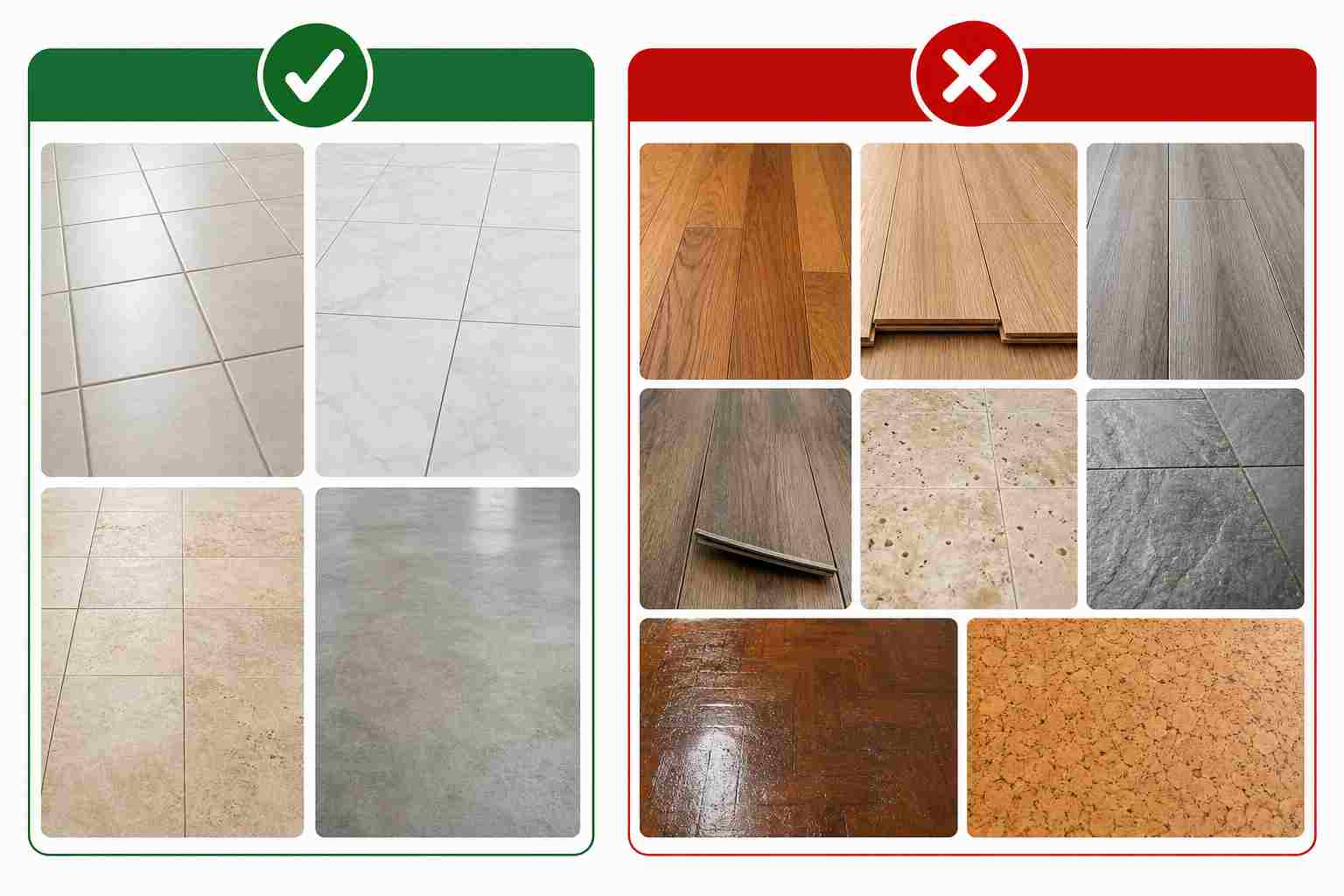
Steam cleaning feels like the perfect deep-clean solution. No harsh chemicals, just high heat and vapor that lifts grime fast. But certain floors can be permanently damaged by steam, and the damage often does not show up right away. Knowing which floor types to avoid before you start can save you from a costly repair bill or a lost security deposit.
The Short Answer: Not Every Floor Can Handle Steam
Steam cleaners use heat and moisture to clean surfaces. While that combination works well on glazed ceramic and porcelain tile, it can warp, swell, or strip protective finishes from floors that are not built to handle sustained heat or moisture exposure. Hardwood, engineered wood, laminate, unsealed natural stone, waxed floors, and most luxury vinyl plank installations are the most common casualties.
Floor Type Safety at a Glance
| Floor Type | Safe for Steam? | Reason |
|---|---|---|
| Glazed Ceramic Tile | Yes | Non-porous, fully sealed surface handles heat well |
| Porcelain Tile | Yes | Dense composition with very low moisture absorption |
| Sealed Natural Stone | Use Caution | Seal degrades over time and must be checked regularly |
| Solid Hardwood | No | Absorbs moisture and warps, cups, or cracks under heat |
| Engineered Wood | No | Layers separate and delaminate under sustained heat |
| Laminate Flooring | No | Compressed wood core swells, buckles, and lifts at seams |
| Luxury Vinyl Plank (LVP) | No | Heat softens adhesive and causes planks to shift or lift |
| Unsealed Natural Stone | No | Porous surface absorbs moisture, leading to staining and pitting |
| Waxed Floors | No | Heat strips the wax coating and leaves a patchy finish |
| Cork | No | Sensitive to both heat and moisture, surface degrades quickly |
Why Steam Heat Damages Certain Floors
Most floor damage from steam cleaning is not immediately visible, which is exactly what makes it a problem. The heat opens up seams, loosens adhesive layers, and forces moisture into materials that were never designed to absorb it. Over time, you start to notice warping, buckling, or a dull film where the finish used to be. By then, the damage is often beyond repair and replacement is the only option.
In Los Angeles, where mid-century homes with original hardwood floors are common across neighborhoods like Silver Lake, Los Feliz, and Leimert Park, and where luxury vinyl plank is the standard finish in newer apartments and rentals throughout Culver City and El Segundo, steam mop damage is a recurring problem. Homeowners and tenants often do not connect it to their cleaning routine until an inspection or a repair estimate makes the cause clear.
Floors You Should Never Steam Clean
Hardwood and Engineered Wood Floors
Solid hardwood and engineered wood floors are highly sensitive to both moisture and heat. Steam drives water vapor directly into the wood grain, causing the boards to swell. With repeated use, you may notice warping and cupping along plank edges, gaps forming between boards as they expand and contract unevenly, a cloudy or dull finish that cannot be restored by buffing, and peeling or flaking of the protective top coat.
Engineered wood, which is constructed from a real wood veneer bonded over several layers of plywood, faces an additional risk. The heat can cause those plywood layers to separate from one another, a process called delamination. Once that starts, there is no fixing the affected boards; they need to be replaced entirely.
Even floors described as sealed are not protected against sustained steam. The seal guards against surface spills, not against vapor being driven into the wood under heat pressure. If you have hardwood or engineered wood anywhere in your home, skip the steam mop entirely and use a barely damp microfiber mop with a pH-neutral hardwood cleaner instead.
Can you steam clean hardwood floors?
No. Steam cleaners force heat and moisture into wood grain, which causes swelling, warping, and finish damage over time. Even sealed hardwood floors are not safe for steam cleaning. Use a lightly damp microfiber mop with a hardwood-safe cleaner instead.
Laminate Flooring
Laminate is made from compressed wood fiber topped with a photographic print layer and a clear wear coat. That core material is extremely sensitive to water, and steam gives it precisely what it cannot handle: sustained heat and moisture at the same time. Common damage includes bubbling or lifting at the seams, edges that curl upward, and a surface that looks permanently streaky or dull even after drying.
One of the more frustrating outcomes is that water can become trapped under the laminate surface where it cannot evaporate. The damage then spreads beyond the area you cleaned, affecting boards you never even touched with the steam mop. This is a frequent problem in Los Angeles rental units, where laminate is widely used as a budget-friendly flooring option. Tenants who steam clean laminate before a move-out inspection sometimes lose part or all of their security deposit because the damage is visible and attributed to improper cleaning.
Unsealed Stone and Natural Stone Tiles
Sealed stone tiles, including most glazed ceramic and porcelain, handle steam reasonably well. Unsealed natural stone is a very different situation. Materials like travertine, marble, and slate are naturally porous. Steam pushes moisture into those pores, which causes discoloration and staining, surface pitting over time, and grout erosion if the joints between tiles are not fully sealed.
Marble deserves extra attention because it is also reactive to heat and can develop micro-cracks with repeated steam exposure. These cracks are nearly invisible at first but become pathways for moisture to penetrate deeper into the stone over time. If you are not sure whether your stone floor is sealed, do a simple water drop test. Place a few drops of water on the surface and wait a few minutes. If the water absorbs into the stone rather than beading up, the floor is unsealed and steam cleaning will cause damage.
Luxury Vinyl Plank Flooring
Luxury vinyl plank, commonly known as LVP, is marketed as waterproof and handles surface moisture well under normal circumstances. But steam cleaning is a different category of exposure than a spilled drink or a damp mop. The main concern is the adhesive layer underneath the planks. Sustained heat from a steam mop can soften the glue that holds planks in place, particularly in glue-down installations. This leads to planks shifting or lifting at the edges, visible gaps forming between boards, and a floor that feels uneven when you walk across it.
Click-lock LVP is somewhat more forgiving because it does not rely on adhesive, but most manufacturers still advise against steam cleaning. Repeated heat exposure can also cause the planks themselves to expand and press against each other, causing the floor to buckle upward in the middle. Always check the manufacturer’s warranty and installation guidelines before using any steam equipment on vinyl plank flooring.
Waxed Floors
Waxed floors, including older hardwood floors and some cork floors finished with paste wax, lose their protective coating quickly when exposed to steam. The heat melts and strips the wax layer, leaving a patchy, uneven surface that needs to be fully stripped down to bare wood and re-waxed to restore properly. This is a labor-intensive process that most people do not anticipate when they use a steam mop thinking they are saving themselves time.
How to Tell If Your Floor Is Safe for Steam
Before using a steam cleaner on any floor, three questions help narrow it down quickly. First, is the surface sealed or unsealed? Only fully sealed, non-porous surfaces handle steam consistently well. Second, what does the manufacturer specify in the care guide or warranty? If steam cleaning is not listed as an approved method, that is your answer regardless of what the surface looks or feels like. Third, is it tile or something else? Glazed ceramic and porcelain tile are the safest options. Almost everything else requires either caution or should be avoided entirely.
Which floors are safe to steam clean?
- Glazed ceramic tile
- Porcelain tile
- Sealed natural stone (checking the seal condition regularly)
- Sealed concrete
- Avoid steam cleaning hardwood, laminate, unsealed stone, waxed floors, and most vinyl plank installations.
What to Use Instead on Sensitive Floors
For hardwood and engineered wood, use a microfiber mop head that has been wrung out until it is barely damp. Pair it with a pH-neutral cleaner made specifically for hardwood. Dry the floor immediately after going over it, and never let any moisture sit on the surface.
For laminate, a dry microfiber mop covers daily maintenance well. When you need something more thorough, a spray cleaner formulated for laminate is the right choice. Avoid vinegar-based cleaners, which can dull the wear coat over time. Never let standing water sit on laminate for any length of time.
For unsealed natural stone, a pH-neutral stone-safe cleaner used with a soft mop is the right approach. Stay away from anything acidic, including vinegar and citrus-based products, which etch natural stone on contact and cause irreversible surface damage.
For luxury vinyl plank, warm water with a small amount of dish soap on a damp mop handles most everyday messes effectively. Rinse the floor and dry it quickly to prevent moisture from seeping into the seams between planks.
Our professional floor cleaning service uses products and techniques matched to each specific floor type, so you get a thorough clean without the risk of damage.
When to Call a Professional
Some floors accumulate built-up grime that regular mopping cannot fully address, and steam cleaning is not a safe alternative to reach for in those situations. A professional cleaning service handles those cases properly, using the right equipment and cleaning solutions matched to the specific floor material in your home.
The Maid Squad has served more than 5,000 customers across Los Angeles with a 4.8-star rating. Whether you have original hardwood in a mid-century home, laminate in a rental apartment, or newer vinyl plank throughout a remodeled space, the team brings the right tools and methods for each floor type.
Book your cleaning today and let the professionals handle it the right way.
Frequently Asked Questions
Can you use a steam mop on tile floors?
Yes, glazed ceramic and porcelain tile are among the safest surfaces for steam cleaning. The non-porous, sealed surface handles heat and moisture without damage. One thing worth checking is the grout condition. If grout lines are cracked or unsealed, moisture from the steam can work its way into those gaps and weaken the grout over time. Sealed, intact grout handles steam cleaning without issues.
Does steam cleaning void flooring warranties?
It can, and this catches a lot of homeowners off guard. Many flooring manufacturers, particularly for hardwood, laminate, and luxury vinyl plank, include clauses in their warranties that specifically prohibit steam cleaning. Using a steam mop on those floors may void your coverage entirely, meaning if the floor later warps or buckles, you would have no recourse. Always read the manufacturer’s maintenance guidelines before choosing your cleaning method.
Is mopping with hot water the same as steam cleaning?
No, and the difference matters. Hot water from a bucket or spray mop is far less intense than a steam cleaner. Steam cleaning equipment heats water to above 200 degrees Fahrenheit and delivers it as pressurized vapor, which penetrates floor materials far more aggressively than a warm mop. Hot water mopping is generally safe for most sealed floors. Steam cleaning is not, outside of the specific floor types designed to handle it.
How often should floors be professionally deep cleaned?
For most households, a professional floor cleaning every three to six months keeps floors in good condition without accelerating wear. High-traffic homes, properties with pets, and homes being prepared for a move-in or move-out may benefit from more frequent professional attention. Regular maintenance cleaning between professional visits extends the time you need between deeper sessions.
Can steam cleaning remove old stains from floors?
Steam can lift surface stains on appropriate floor types like ceramic and porcelain tile. For floors where steam is not safe, such as hardwood or laminate, attempting stain removal with a steam mop will typically cause more damage than the stain itself. On those surfaces, a specialized floor cleaner applied with a damp cloth, or a consultation with a professional cleaning service, gives you a much better outcome without the risk of permanent damage.