
Before applying anything to a chenille couch, find the cleaning code tag under a cushion or on the underside of the sofa frame. That single letter determines which products are safe. Using water on an S-coded fabric, or a solvent on a W-coded one, causes damage that cannot be undone.
The main rule throughout any cleaning method: never rub chenille when it is wet. Rubbing crushes the pile fibers and leaves a flat, matted patch that stays permanently, even after the fabric dries.
What Chenille Fabric Is and Why It Needs Different Care
Chenille is constructed by cutting short fibers radially around a core yarn, creating a soft, raised pile on all sides. That pile gives the fabric its velvety feel, and it is also what makes chenille sensitive to water, friction, and heat.
When chenille pile gets wet and is rubbed or pressed in the wrong direction, the fibers mat together and collapse. As the fabric dries, those fibers set in the flattened position. The result is a dull, smooth patch where the raised pile used to be. Crushed chenille pile does not spring back.
Chenille also pills more readily than most upholstery fabrics because the cut fiber ends on the pile surface catch on each other during use. Abrasive cleaning tools and scrubbing motions accelerate pilling and age the fabric faster than normal wear would.
How to Read Your Chenille Sofa Cleaning Code
Quick Answer: What do chenille sofa cleaning codes mean?
W: Water-based cleaners only. S: Dry cleaning solvent only, no water. S/W or W/S: Either water or solvent is safe. X: Vacuum only, no liquids or solvents.
The tag is usually under a seat cushion or attached to the sofa frame underneath. Always check it before applying any product.
The cleaning code is set by the furniture manufacturer based on the specific fiber content and fabric backing. Two chenille sofas that look nearly identical can have different codes. If the tag is missing, test any product in a hidden area such as the back of a cushion and let it dry completely before applying it anywhere visible.
Dry Cleaning vs. Water-Based Cleaning on Chenille
S-coded chenille requires dry cleaning solvent only. Water causes the pile fibers to swell unevenly and leaves permanent watermarks or pile distortion even after the fabric dries completely. Rayon and viscose chenille, which are common in many sofas, are more moisture-sensitive than cotton chenille and should always be treated as S-coded unless the tag says otherwise.
W-coded chenille tolerates water-based cleaning but should never be soaked. Apply cleaning solution with a barely damp cloth, blot rather than wipe, and dry the area quickly by pressing a dry cloth onto the cleaned section to pull moisture out.
S/W-coded chenille gives more flexibility. Water handles most stains well. A dry cleaning solvent is the better choice for oil-based stains because it dissolves grease without saturating the fabric.
How to Clean a Chenille Couch
Regular Maintenance
Vacuum the sofa weekly using an upholstery attachment on low suction. Work in the direction of the pile, from the back of the sofa toward the front and from top to bottom on the cushions. Use the crevice tool along seams and between cushions where dust and debris collect most.
Rotate and flip cushions monthly where the design allows. This distributes wear evenly and slows pile compression in high-contact areas.
Spot Cleaning Stains
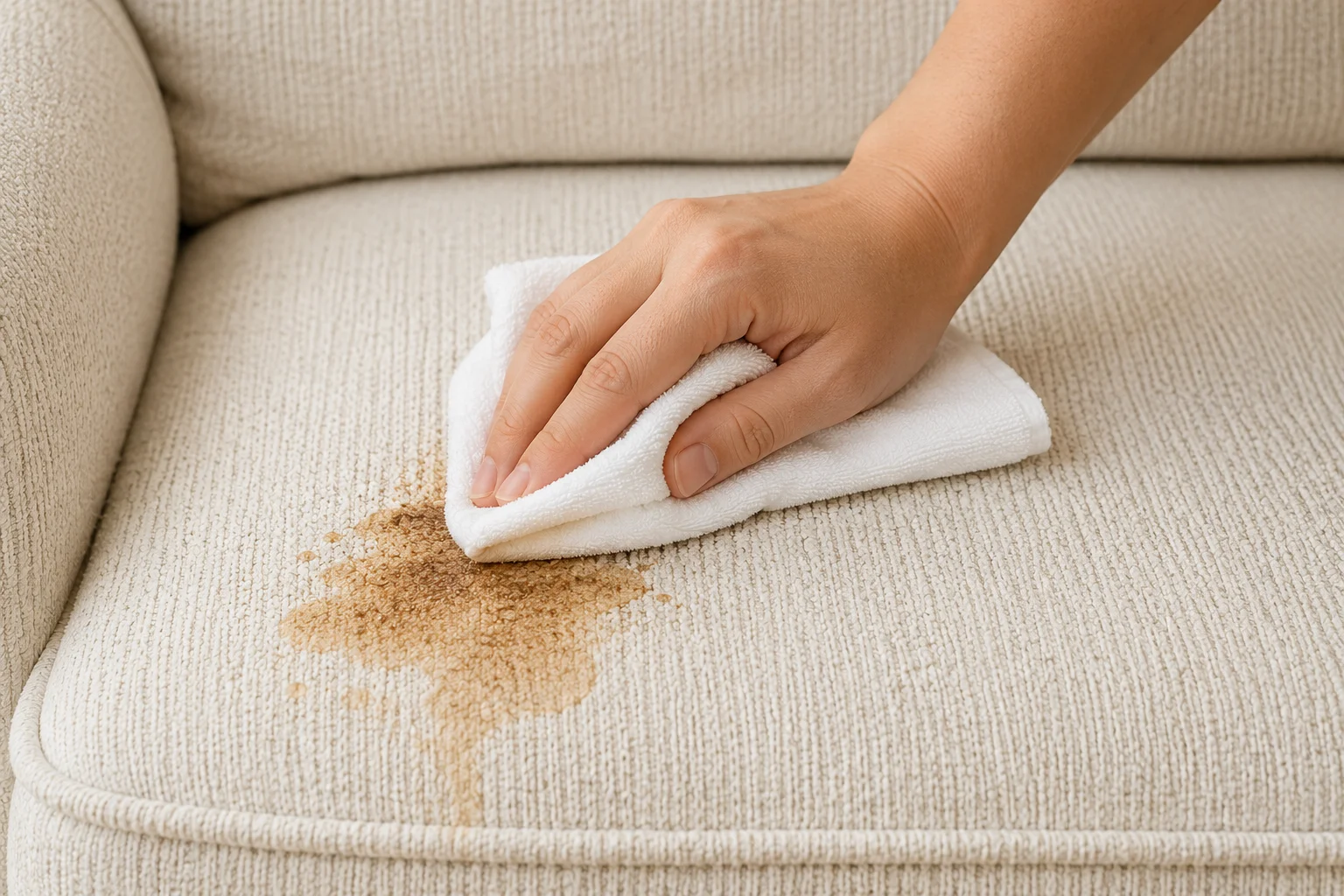
Blot fresh spills immediately with a clean dry white cloth. Press firmly and lift straight up. Replace the cloth with a fresh section as soon as the area you are blotting becomes saturated.
Once the spill is absorbed, apply your cleaning product based on the sofa’s cleaning code. On W or S/W coded chenille, mix one teaspoon of clear dish soap with one cup of cool water. Apply a small amount to a clean white cloth and blot from the outside edge of the stain inward. Never pour any solution directly onto the fabric.
Let the cleaned area dry completely before deciding if the stain has lifted. Chenille looks darker when wet and often returns to near its original appearance as it dries. Do not apply more product to an area that has not fully dried.
Deep Cleaning
For a full deep clean on W or S/W coded chenille, use a foam upholstery cleaner applied section by section. Work it gently into the pile with a soft cloth moving in the pile direction, then wipe away with a clean damp cloth before it dries. Keep sections small so no area stays wet for long.
For S-coded chenille, apply a dry cleaning foam according to the product label. Allow it to dry to a powder, then vacuum away the residue. Do not use water at any stage, including the drying step.
After deep cleaning, let the sofa dry with good airflow before sitting on it. A fan directed at the sofa speeds drying and reduces the risk of watermarks forming as moisture migrates through the fabric.
Stain-Specific Treatment on Chenille
Food and Beverage Stains
Scrape any solid residue off the fabric with a blunt edge before applying any liquid. On W or S/W coded chenille, blot with a cloth dampened with cool water first. Follow with the diluted dish soap solution if water alone does not clear the stain.
For coffee, tea, or red wine stains that have dried, a pre-treatment upholstery stain remover appropriate for your cleaning code, applied and left for two minutes before blotting, is more effective than dish soap alone.
Oil and Grease Stains
Apply cornstarch or talcum powder directly onto the stain and leave it for at least 20 minutes. The powder draws oil out of the pile. Brush it away gently in the pile direction with a soft brush, then vacuum.
On S/W coded chenille, follow the powder step with dry cleaning solvent on a clean cloth, blotted onto the remaining stain. On W-only coded chenille, repeat the powder application rather than reaching for a solvent.
Ink Stains
Dab isopropyl alcohol at 70 percent concentration onto a cotton swab and blot the ink stain from the outer edge inward. Use a fresh swab with each blot. This method is appropriate for W and S/W coded chenille.
On S-coded chenille, use a dry cleaning solvent on a cotton swab instead. Test in a hidden area first, as some chenille dyes are affected by alcohol.
Pile Direction and How to Restore It
Chenille pile has a natural direction. Running your hand across the fabric one way feels smooth; the other way feels slightly resistant. All cleaning strokes, vacuuming passes, and drying motions should follow the smooth direction.
If pile has been disturbed during cleaning, lightly mist the affected area with plain water from a spray bottle held at a distance, then use a soft velvet brush to stroke the pile back into its natural direction. Allow it to dry without touching it.
For pile that has been crushed by prolonged pressure, hold a steam iron several centimeters above the area without letting the iron contact the fabric. Allow the steam to penetrate the pile, then immediately brush gently in the pile direction. This lifts lightly flattened fibers but does not fully restore severe or longstanding crush.
What Never to Do to Chenille
- Never rub a wet chenille surface. Blot only.
- Never use a stiff brush, abrasive sponge, or scrubbing pad on the pile. These cause pilling that cannot be reversed.
- Never apply water to S-coded chenille. Even a single application can cause watermarks and permanent pile distortion on rayon or viscose chenille.
- Never use a steam cleaner directly on chenille. High-pressure steam saturates the pile and can collapse it permanently.
- Never put chenille cushion covers in a hot dryer unless the care label specifically says it is safe. Heat shrinks many chenille fibers and causes the fabric to pucker.
- Never use bleach on chenille. It strips the dye and weakens the fiber structure.
Chenille Cleaning Code Reference Table
|
Cleaning Code |
What It Means | Safe to Use Water? | Recommended Method | Avoid |
|---|---|---|---|---|
|
W |
Water-based cleaners only | Yes | Water and upholstery shampoo, blot only |
Solvents, dry cleaning fluid |
|
S |
Solvent or dry cleaning only | No | Dry cleaning solvent or foam only |
Water, steam, wet cloths |
|
S/W or W/S |
Either water or solvent safe | Yes, with care | Water for most stains, solvent for oil |
Excess moisture, rubbing |
| X | Vacuum only | No | Vacuum with upholstery attachment only |
All liquids and solvents |
For cleaning guidance on other fabric sofa types, our guide on how to clean a fabric sofa covers the broader upholstery cleaning process.
When to Call a Professional
Chenille sofas with an X cleaning code, large stains covering more than a small area, deeply embedded pet hair, pile crushed across multiple sections from improper cleaning, or heavy soiling buildup are good candidates for professional upholstery cleaning.
Professional upholstery cleaners have low-moisture extraction equipment and chenille-safe solutions that clean the fabric without over-wetting it. They can also assess whether pile damage is reversible or has reached permanent wear.
The Maid Squad has served more than 5,000 customers across Los Angeles with a 4.8-star rating. Our recurring cleaning service keeps upholstery, carpets, and the rest of your home in consistently good condition.
Book your cleaning today and let our team handle what home cleaning cannot safely address.
Learn more about our recurring cleaning service and how regular visits protect your furniture over time.
Frequently Asked Questions
Can I put chenille cushion covers in the washing machine?
Only if the care label specifically says so. Most chenille contains rayon or viscose fibers that shrink and distort in a washing machine. If the label permits it, use cold water, a gentle cycle, and place the cover in a mesh laundry bag to protect the pile from abrasion. Never put a chenille cover in a hot dryer. Lay it flat or hang it to dry, then restore the pile direction with a soft brush once it is fully dry.
How do I get a watermark out of chenille fabric?
Lightly mist the entire cushion panel with plain water from a spray bottle held at a distance. This re-wets the fabric evenly so it dries uniformly rather than leaving a tide mark at the edge of the original wet area. Allow it to dry completely with good airflow and brush the pile gently in its natural direction as it dries. On S-coded chenille, use a dry cleaning solvent applied evenly across the panel instead of water.
Why does my chenille sofa look flat or crushed in some areas?
Pile compression in chenille comes from three main sources: sitting in the same spot repeatedly, cleaning against the pile direction, and moisture that was not dried quickly enough. Rotating cushions monthly distributes wear more evenly. For existing crushed areas, the steam hover technique described in the pile restoration section can lift lightly flattened fibers if the crushing is not severe or longstanding.
Can I use a steam cleaner on a chenille couch?
No. Steam cleaners deliver high-temperature pressurized moisture directly into the pile, saturating the fibers and causing them to mat and collapse. For S-coded chenille, steam also introduces water into a fabric that should never contact moisture. The correct option for a full deep clean is a professional upholstery cleaner using low-moisture extraction equipment.
How often should a chenille sofa be cleaned?
Vacuum weekly to prevent debris from working into the pile. Spot clean stains immediately rather than letting them set. A full deep clean every six to twelve months keeps the sofa in good condition without over-wetting the fabric from too-frequent treatment. Households with pets or young children benefit from professional upholstery cleaning every three to four months to address embedded pet hair and soiling that vacuuming does not fully remove.