
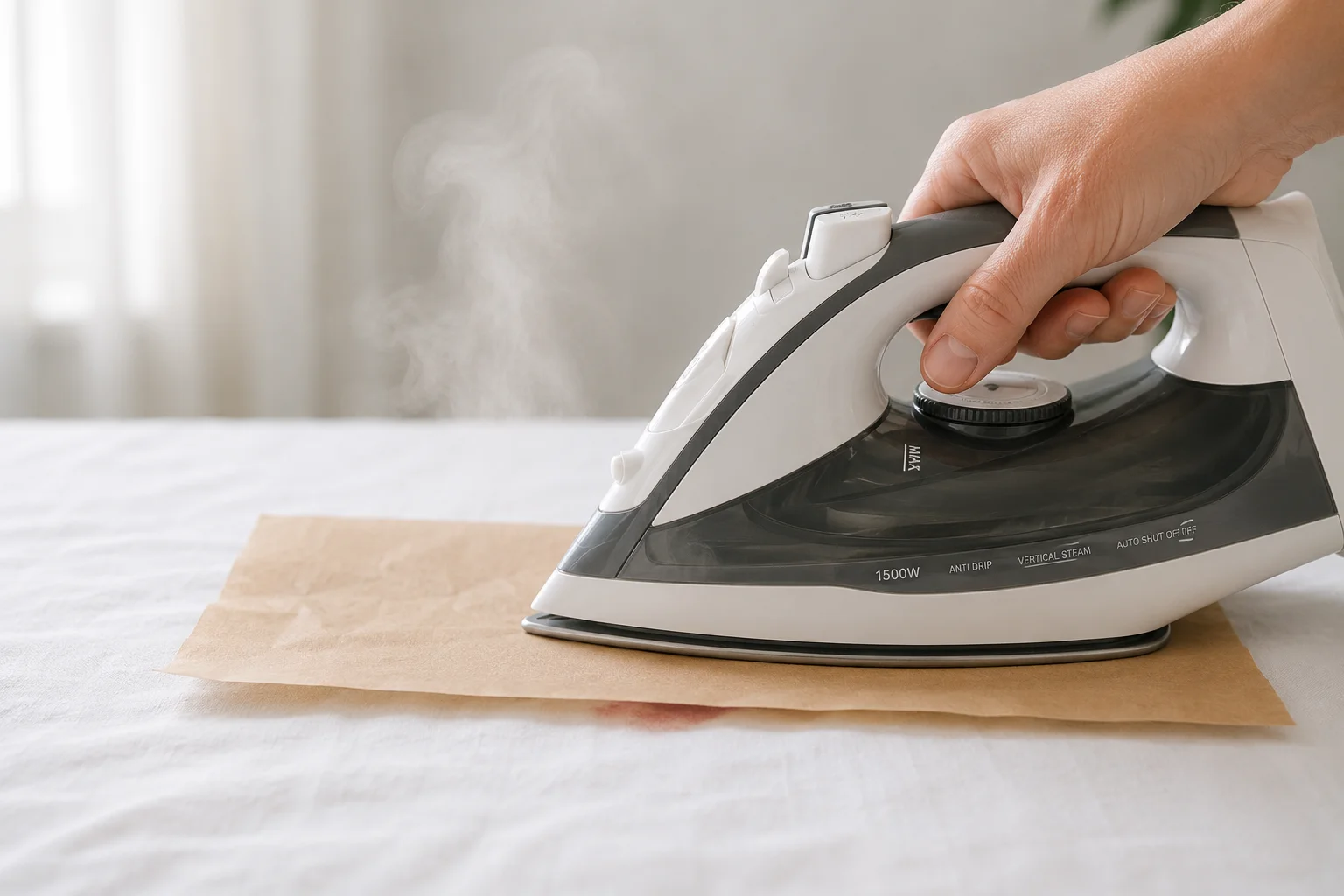
Let the wax harden completely before touching it. Do not rub, pick, or scrape at soft wax. Once the wax has set, place a bag of ice or a freezer pack over it for five to ten minutes to make it brittle. Lift the wax off with a blunt edge, work from the outer edge inward, then address any residue with heat.
If the candle was colored, a dye stain will remain in the fabric after the wax is gone. That is a separate problem and needs a separate treatment, covered below.
Why Wax Behaves Differently from Other Fabric Stains
Most fabric stains are liquid-based and treated by dissolving and rinsing the staining agent out of the fiber. Wax is a solid that has bonded to the fabric surface as it cooled and contracted. Liquid cleaning products applied to solid wax do not dissolve it. They spread the oily components of the wax deeper into the fabric without removing the solid portion.
Wax removal works in two stages. First, the solid wax is made brittle by cold so it can be lifted off without smearing. Second, any remaining wax residue left in the fiber weave is melted and drawn out of the fabric by heat and absorbed into a paper layer. These two stages address different physical states of the wax and cannot be reversed or combined.
Colored candles add a third problem. The pigments used to color candle wax are often oil-soluble dyes that absorb into fabric fibers separately from the wax itself. Removing the wax does not remove the dye. A tablecloth that had red candle wax on it may look clean after the wax is lifted but show a faint red tint in the fabric where the dye has absorbed. That requires a separate treatment once the wax is fully gone.
The Three-Stage Removal Method
Stage 1: Freeze and Harden
If the wax is still soft or warm, do not touch it. Leave it to cool and harden at room temperature first. Attempting to remove soft wax pushes it into the fabric weave and makes removal much harder.
Once the wax has set at room temperature, place a sealed bag of ice cubes or a freezer pack directly on the wax deposit. Leave it for five to ten minutes. Alternatively, fold the tablecloth carefully so the wax deposit faces outward and place the affected section in the freezer for fifteen to twenty minutes.
The goal is to make the wax brittle enough that it snaps and lifts rather than smearing when pressure is applied. Cold-hardened wax has a different physical structure than room-temperature wax and releases from fabric fibers more cleanly.
Stage 2: Scrape and Lift
Once the wax is thoroughly cold, use a blunt edge to lift it from the fabric. A butter knife, the back of a spoon, or an old credit card works well. Work from the outer edge of the wax deposit toward the center, lifting flakes rather than dragging across the fabric.
Do not use anything sharp. A sharp edge cuts fabric fibers rather than lifting wax off them. On textured or woven fabrics, work gently in the direction of the weave to avoid pulling threads.
After lifting the visible wax, press a piece of tape firmly onto the surface and pull it away to lift smaller wax fragments still sitting on the surface. Repeat with fresh tape until no more wax transfers. Some residue will still be embedded in the fabric at this point. That is addressed in stage three.
Stage 3: Heat and Absorb
Set your iron to the lowest effective heat setting for the fabric type. Place two layers of white paper towel or a sheet of brown paper bag over the wax residue area. Do not use newspaper. The ink in newspaper transfers to the fabric under heat.
Press the warm iron over the paper for ten to fifteen seconds without moving it. Lift the paper and check: the remaining wax will have melted and transferred from the fabric into the paper. Move to a clean area of paper and repeat until no more wax transfers.
Use white paper towels rather than colored ones throughout this process. Colored paper can transfer dye to a warm, damp fabric surface under iron pressure.
Keep the iron moving slowly if the paper starts to scorch. A scorched paper towel means the iron temperature is too high for the fabric. Drop it one setting and continue.
Removing the Dye Stain from Colored Candles
After the wax is fully removed, check the fabric in good light. If a faint color stain remains in the fiber, the candle dye has absorbed into the tablecloth. This is common with red, blue, and dark-colored candles.
Apply a small amount of plain dish soap directly to the dye stain and work it into the fabric with your fingers. Leave it for five minutes. Rinse with cold water. For most light dye stains on cotton or linen, this is enough to clear the remaining color.
For a deeper or more stubborn dye stain on a white or light-colored tablecloth, apply a stain remover product containing oxygen bleach and leave it for the time specified on the label before washing. Do not use chlorine bleach on colored tablecloths as it removes the tablecloth dye along with the candle dye.
On synthetic fabrics, a small amount of isopropyl alcohol dabbed onto the dye stain with a cotton ball and blotted gently can lift oil-soluble candle dye that water-based treatments do not reach. Test in a hidden seam area first, as alcohol can affect some synthetic dyes.
Fabric Type Considerations
Cotton and Linen
Cotton and linen are the most forgiving fabrics for wax removal and tolerate the full freeze, scrape, and heat method without damage. Most cotton and linen tablecloths can be machine washed after the wax treatment to remove any remaining residue and dye stain.
Check the care label for the correct wash temperature. Hot water sets some dye stains into cotton, so washing in warm water with a stain-treating detergent is generally safer than the hottest setting.
Polyester and Synthetic Blends
Polyester and synthetic blend tablecloths handle the ice and scraping stages well. For the heat stage, keep the iron on a low setting. Polyester can melt or develop a shiny heat mark if the iron is too hot. A warm iron rather than a hot one is enough to melt wax residue out of synthetic fibers.
If the fabric has a slight sheen or feels stiff after the heat stage, the iron was too warm for the material. Allow it to cool and avoid ironing that area again. The fabric may recover as it cools.
Silk and Delicate Fabrics
Do not use a direct iron on silk. The heat stage for silk uses a hair dryer held at a distance of several centimeters on a low heat setting, with a paper towel between the dryer and the fabric. Move the dryer slowly across the paper to melt the wax residue without concentrating heat in one spot.
For dye stains on silk, use a specialist silk fabric cleaner rather than dish soap or alcohol. Silk is protein-based and reacts differently to cleaning agents than plant-based fibers. If the tablecloth is valuable or has sentimental significance, take it to a dry cleaner rather than attempting dye stain treatment at home.
Dry Clean Only Tablecloths
The freeze and scrape stages are safe for dry clean only fabrics. Do not attempt the heat stage at home on dry clean only fabric, and do not apply any liquid cleaning product to the dye stain.
After removing as much solid wax as possible with the cold and scraping method, take the tablecloth to a dry cleaner and point out the wax residue and any remaining dye stain. Dry cleaners have solvents and processes for wax and dye removal that are safe for delicate fabrics.
What to Do When Wax Has Already Been Rubbed In or Ironed
Wax that has been rubbed in, pressed flat, or ironed directly without paper is harder to remove because the wax has been forced deeper into the fiber weave and spread across a larger area.
Start with the freeze stage regardless of how the wax got into the fabric. Freezing makes even spread-out wax deposits more brittle and easier to break up. Use the tape lifting method after scraping to pull as much of the fragmented wax off the surface as possible.
For the heat stage on rubbed-in or ironed wax, use more paper layers, three or four rather than two, and work slowly across a wider area. The wax has spread into surrounding fibers and the paper needs more surface coverage to draw it all out. Change the paper frequently and continue until no more wax transfers.
A residue that remains after several heat passes can be treated with a small amount of dry-cleaning solvent applied to a clean cloth and blotted onto the affected area. Dry-cleaning solvents dissolve the hydrocarbon compounds in candle wax and can lift residue that the heat method alone does not fully clear. Work in a well-ventilated area and follow the product label.
Wax Removal Method by Fabric Type
| Fabric Type | Freeze Method | Heat Method | Dye Stain Treatment | Machine Wash? |
|---|---|---|---|---|
|
Cotton and linen |
Ice pack or freezer | Iron over brown paper | Dish soap or stain remover, then wash | Yes, check label for temp |
| Polyester blends | Ice pack | Low heat iron over paper towel | Dish soap pre-treat, cold wash |
Yes, cold or warm |
|
Silk |
Ice pack only | No iron, warm hair dryer on low at distance | Specialist silk cleaner, test first | No, hand wash or dry clean |
| Velvet | Ice pack | No iron, steam from distance only | Specialist cleaner or dry clean |
No, dry clean recommended |
|
Dry clean only |
Ice pack to harden | No heat at home | Do not treat, take to dry cleaner | No |
| White cotton or linen | Ice pack or freezer | Iron over brown paper | Dish soap first, then diluted hydrogen peroxide if dye remains |
Yes |
Quick Answer: How do you get candle wax out of a tablecloth?
Let the wax harden, then apply ice to make it brittle. Scrape off the solid wax with a blunt edge, working from outside in. Place white paper towels over the residue and press a warm iron over the paper to melt and absorb the remaining wax. Treat any color stain left by a colored candle with dish soap or a stain remover before washing.
Prevention Tips for Future Candle Use
- Use candle holders with a wide base or a deep drip tray that catches wax before it reaches the tablecloth. A holder that is too narrow for the candle size is the most common reason wax drips onto the fabric.
- Place a small piece of aluminum foil, a decorative tile, or a mirrored coaster under the candle holder. This catches any overflow without affecting the table setting.
- Keep candles away from drafts. Air movement from an open window or a nearby vent causes uneven burning and increases dripping significantly.
- Trim candle wicks to about six millimeters before each use. A long wick produces a larger, more unstable flame that drips more than a properly trimmed one.
- Choose dripless candles for tablecloth protection. These are made with harder wax formulations and a higher melting point that reduces dripping. They are not entirely drip-free in a draft but perform noticeably better than standard paraffin candles.
For a broader guide on treating other types of fabric and surface stains at home, our stain removal guide covers methods for common household stains across different surfaces.
When to Call a Professional
A tablecloth with a large wax deposit that has spread across a significant area, wax that has been ironed in repeatedly without paper, or a dye stain on a delicate or dry clean only fabric that did not respond to home treatment are all good candidates for professional cleaning.
The Maid Squad has served more than 5,000 customers across Los Angeles with a 4.8-star rating. Our recurring cleaning service keeps your home consistently clean so fabrics, surfaces, and furnishings stay in better condition between deep cleaning sessions.
Book your cleaning today and let our team handle the hard-to-shift problems.
Learn more about our recurring cleaning service and how regular visits keep your home in consistently good condition.
Frequently Asked Questions
Can I use a hair dryer instead of an iron to remove wax from a tablecloth?
Yes, a hair dryer works for the heat stage and is the better choice for delicate fabrics that cannot tolerate direct iron contact. Hold the dryer several centimeters from the paper towel layer and use a medium heat setting. Move it slowly rather than holding it in one spot. The melting takes longer than with an iron but produces the same result without the risk of heat marks on sensitive fabric.
Does WD-40 remove candle wax from fabric?
WD-40 is sometimes suggested as a wax remover because its petroleum-based compounds dissolve the hydrocarbon components of wax. It does loosen wax residue from fabric, but it leaves an oily stain that is often more visible than the original wax residue and requires significant washing to remove fully. The freeze and heat method removes wax cleanly without introducing a secondary oil stain. If you use WD-40 as a last resort, apply dish soap immediately afterward to cut the oil before washing.
How do I remove wax from a tablecloth without an iron?
The freeze and scrape stages remove the solid wax without any heat. For the residue stage without an iron, hold a hair dryer several centimeters above a paper towel placed over the wax and move it slowly to melt and transfer the residue. Alternatively, place the tablecloth in a warm dryer with a few paper towels for ten minutes. The tumbling action and heat work together to transfer the wax residue from the fabric onto the paper towels inside the drum.
Can I put a wax-stained tablecloth in the washing machine?
Not before removing the solid wax first. Washing a tablecloth with solid wax still in the fabric puts melted wax into the washing machine drum and pump, where it can solidify on the drum walls and internal components as the machine cools. Complete the freeze, scrape, and heat stages first to remove all solid wax and most residue. Then wash the tablecloth according to the care label. If any faint wax residue remains after washing, repeat the heat stage before putting the tablecloth in the dryer, as dryer heat will set any remaining wax more firmly into the fabric.
What removes colored candle wax dye from white fabric?
For white cotton or linen tablecloths, dish soap applied to the dye stain and left for five minutes before rinsing removes most light dye residue. For a more stubborn dye stain, an oxygen bleach stain remover applied before washing handles deeper color. On white fabric where chlorine bleach is safe per the care label, a diluted solution of one tablespoon bleach in one cup water applied carefully to the stain and rinsed immediately can clear residual color that oxygen bleach does not fully remove. Do not use chlorine bleach on fabric with any colored pattern or trim.